FIELD REVIEW / Action platformer
Blasphemous
A severe gothic adventure with an unusually coherent visual identity and demanding encounters. Measured positioning and a connected map give its combat a different rhythm from a pure boss rush.
Game facts
- Developer
- The Game Kitchen
- Publisher
- Team17
- Released
- 10 September 2019
- Platforms
- Windows · macOS · Linux (Steam edition)
- Model
- Paid game
- PEGI
- 16 — Nintendo Switch edition; not a separate PC classification
- Players
- Single-player
- Length
- Medium
- Difficulty
- 4 / 5 · Challenging
- Steam Deck
- Verified
PEGI source ↗ · Steam Deck status source ↗
Edition: Base game
The score, explained
The interest and responsiveness of the core decisions and actions.
How progression, exploration and goals fit together.
The coherence of the visual, musical and narrative presentation.
How clearly the game explains its rules and offers useful ways to engage.
The depth of optional goals, alternative approaches and reasons to return.
An unforgiving pilgrimage
Blasphemous follows the Penitent One through Cvstodia, a world shaped by a curse and populated by dangerous creatures and tormented inhabitants. Sword combat, prayers and equipment choices form the player's tools for surviving that journey. The game makes brutality and difficulty part of the proposition, so the recommendation should begin there rather than only with the striking artwork. The strongest element is the relationship between fighting and exploring a hostile connected world. It is more measured than the presentation score because this kind of demanding adventure is strongly dependent on taste. Players who want to wander with few interruptions may find the encounters too central, while those who enjoy earning a route through danger have a clearer fit.
Discoveries that change the pilgrimage
Relics, rosary beads, prayers and sword-related options give exploration practical consequences. A discovery can alter capabilities or suggest another approach to an obstacle, while encounters with inhabitants add context to the world. The design also includes large bosses that ask the player to learn how they move and respond. We rate the structure positively for making those elements parts of the same pilgrimage rather than disconnected modes. The likely friction is that searching and fighting compete for attention: a player interested in one may have to engage with the other before progressing. This is not an open-ended role-playing framework in which every challenge can necessarily be avoided through a different social or economic system.
A powerful visual identity with clear limits
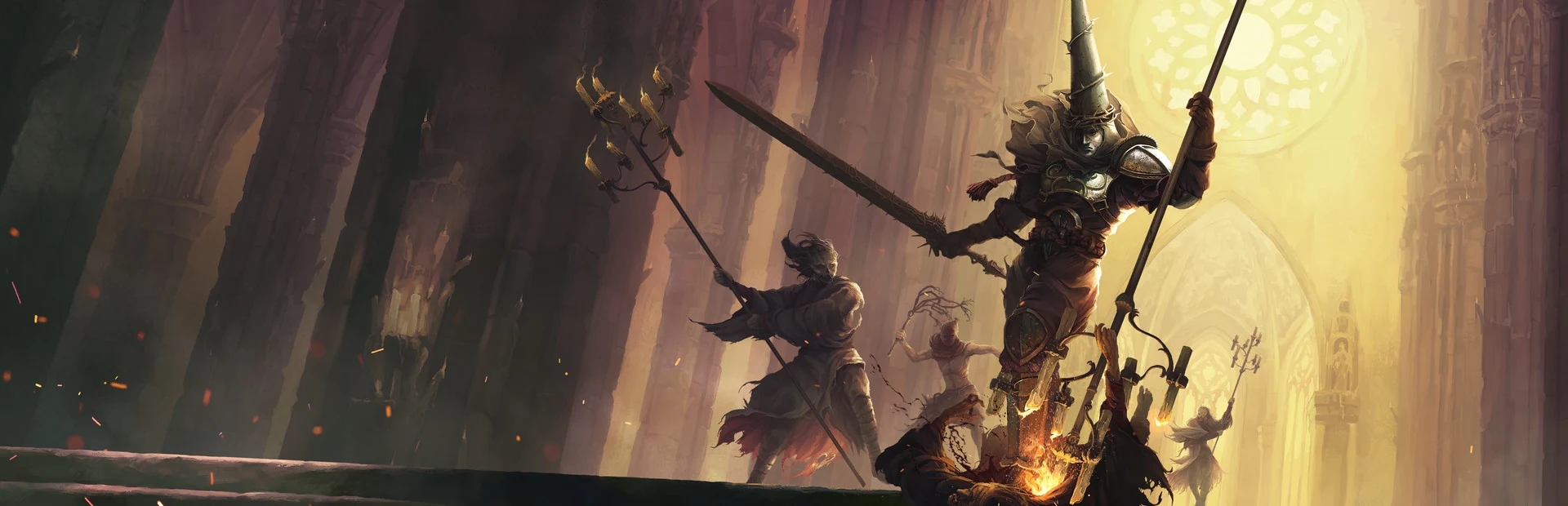
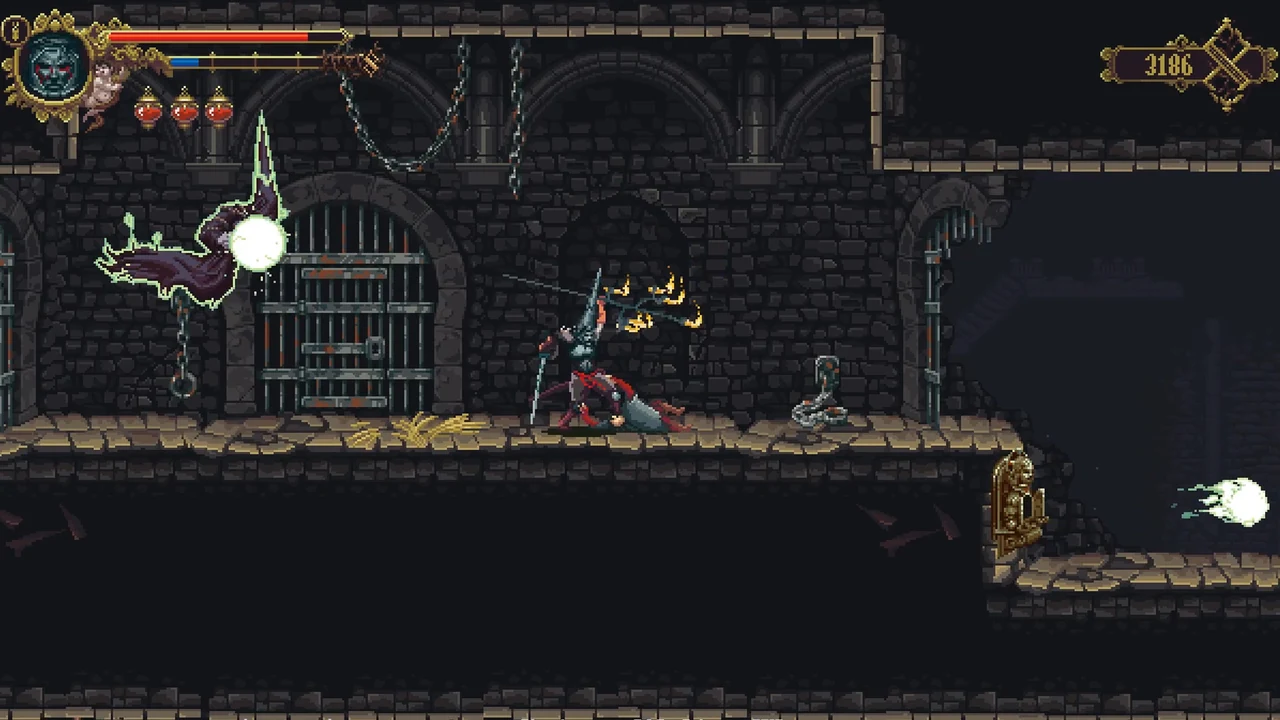
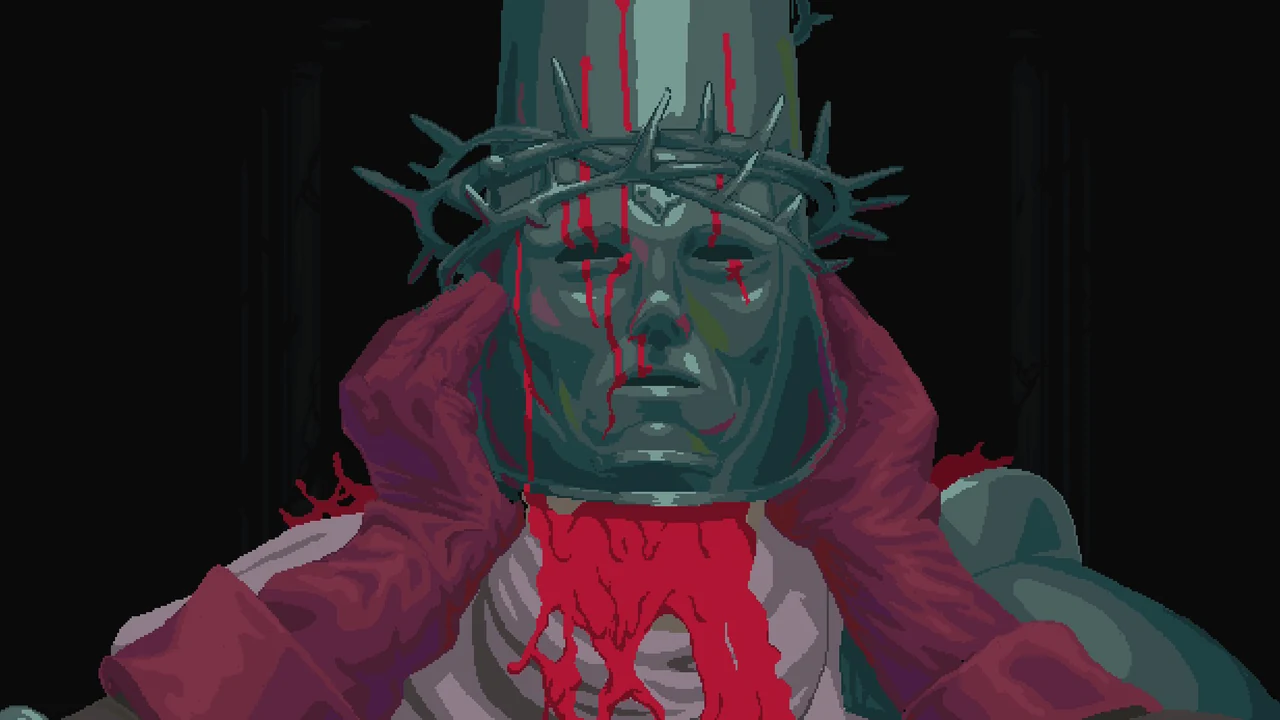
Blasphemous uses detailed pixel art to present a world of distorted bodies, ceremonial forms and gothic landscapes. Its religious imagery and graphic violence are central to the atmosphere rather than occasional flourishes. We rate the presentation highly because those elements give Cvstodia a coherent and memorable identity. That judgement is not an endorsement of suitability for every audience. Someone who dislikes body horror or unsettling religious imagery should treat those features as material considerations even if the pixel-art style initially appears nostalgic. Cvstodia's churches, processions and grotesque inhabitants establish a coherent world of guilt and religious imagery. The Penitent One's journey is deliberately oppressive, and that atmosphere remains important when judging whether the adventure's difficult encounters sound inviting.
Choose the world and the challenge together
Blasphemous is strongest as a recommendation when its atmosphere and its dangerous action are both attractions. Secrets and different equipment choices provide reasons to investigate further, while learning encounters can make a return journey feel more controlled. Our return score recognises those available possibilities without assuming every player wants to repeat the pilgrimage. Nine Sols is an informative alternative if a connected action world appeals but deflection-based combat and a different cultural aesthetic are the stronger draw. Choose Blasphemous when Cvstodia's severe identity makes you curious enough to face its obstacles. The visual world is a major reason to begin, but the willingness to engage with demanding fights and routes is what makes the recommendation practical. Measured positioning and a connected map give its combat a different rhythm from a pure boss rush.
The verdict
A severe gothic adventure with an unusually coherent visual identity and demanding encounters. Measured positioning and a connected map give its combat a different rhythm from a pure boss rush.
Reasons to play
- A consistent gothic identity makes the world distinctive
- Relics and combat options give discoveries practical value
- Bosses and hidden stories support exploration
Reasons to think twice
- Graphic violence and religious horror are central
- Dangerous routes and demanding fights may interrupt exploration
See the game
Assist & accessibility
Explore the available settings and control options on the official game page before choosing your setup.
Parents’ guide
Players: Single-player. No in-game purchase marker in the checked Steam listing. Separate downloadable content may be sold.
Age classification: 16. Nintendo Switch edition; not a separate PC classification
A useful starting tip
Review what a newly found relic or prayer changes before revisiting an area you previously could not negotiate.
A different direction
Compare this with Nine Sols: A precise deflection-led adventure with a distinctive meeting of science fiction and Taoist imagery. Deflection is the central commitment here, making it a strong pick for players who enjoy learning defensive timing.
Official sources
Reviewed: November 2026
You might also like
 Sekiro: Shadows Die Twice - GOTY EditionRead review →
 HadesRead review →
 CelesteRead review →