FIELD REVIEW / Roguelike
Hades
Choose Hades for fast action runs, varied builds and a story that continues between attempts.
Game facts
- Developer
- Supergiant Games
- Publisher
- Supergiant Games
- Released
- 17 September 2020
- Platforms
- Windows · macOS (Steam edition)
- Model
- Paid game
- PEGI
- 12 — Nintendo Switch edition; not a separate PC classification
- Players
- Single-player
- Length
- Medium
- Difficulty
- 4 / 5 · Challenging
- Steam Deck
- Verified
PEGI source ↗ · Steam Deck status source ↗
Edition: Base game
The score, explained
The interest and responsiveness of the core decisions and actions.
How progression, exploration and goals fit together.
The coherence of the visual, musical and narrative presentation.
How clearly the game explains its rules and offers useful ways to engage.
The depth of optional goals, alternative approaches and reasons to return.
An escape plan that changes as you go
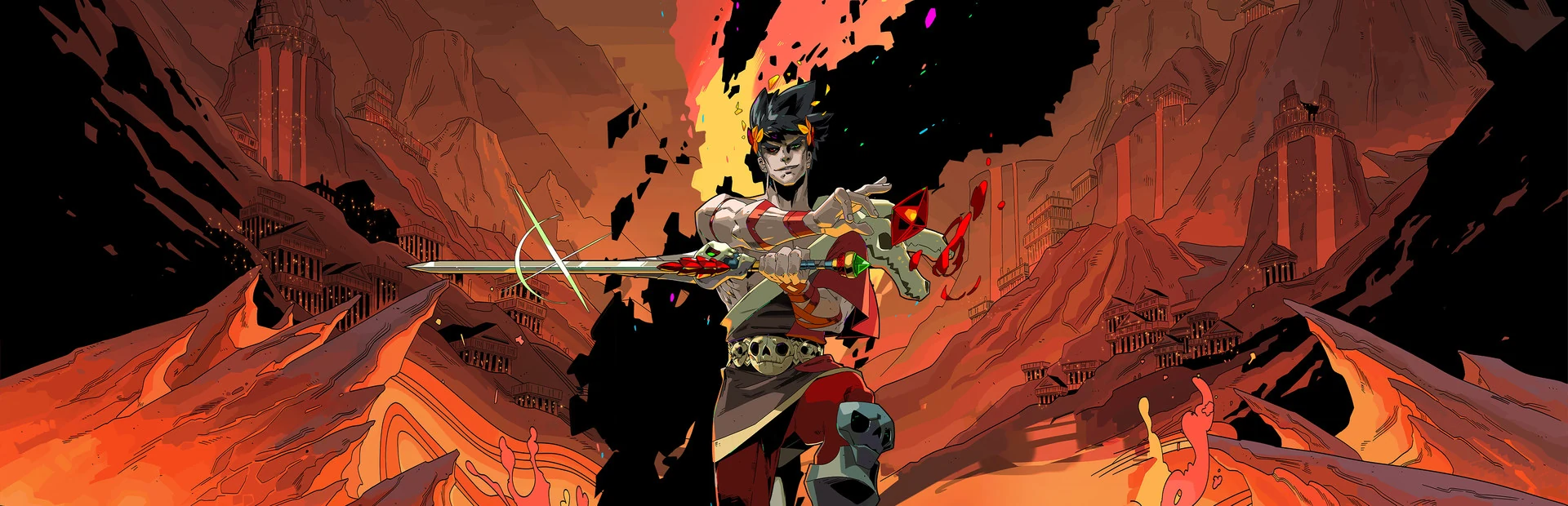
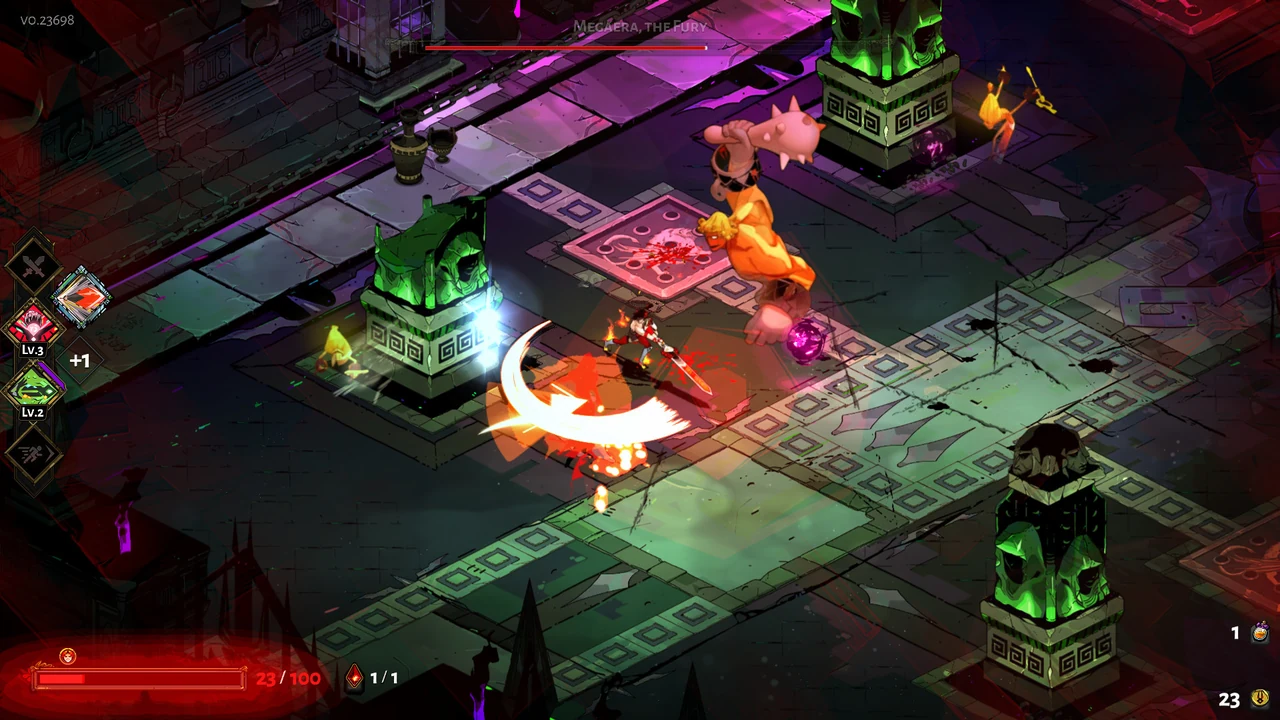
Hades builds its action around repeated attempts to escape the Underworld. Weapons establish a starting approach, while boons from the Olympians change the possibilities during a run. The design makes combining those effects central to the experience, so success is not only a matter of repeating a fixed attack sequence. The strongest element is that mixture of execution and adaptation. The recommendation still depends on wanting action to return in recognisable cycles. Players who prefer one uninterrupted story journey may find repeated attempts less appealing, while those who enjoy making a build work under changing conditions have a clear reason to consider the game. The next escape is another plan, not simply another identical level.
A setback does not stop the story
Conversations and permanent development continue between attempts, giving the return home a purpose beyond resetting the action. The game connects relationships, upgrades and discoveries to the repeated escape structure. This works because it makes a failed run part of an ongoing journey rather than an entirely separate event. The trade-off is that the player needs to accept repetition as the framework for progress. Reaching one objective does not necessarily exhaust the character stories or the available challenges. Hades is better approached as a game about returning with something learned or changed than as an adventure whose value depends on seeing each room only once. The home remains a meaningful part of each attempt.
Characters give the Underworld a voice
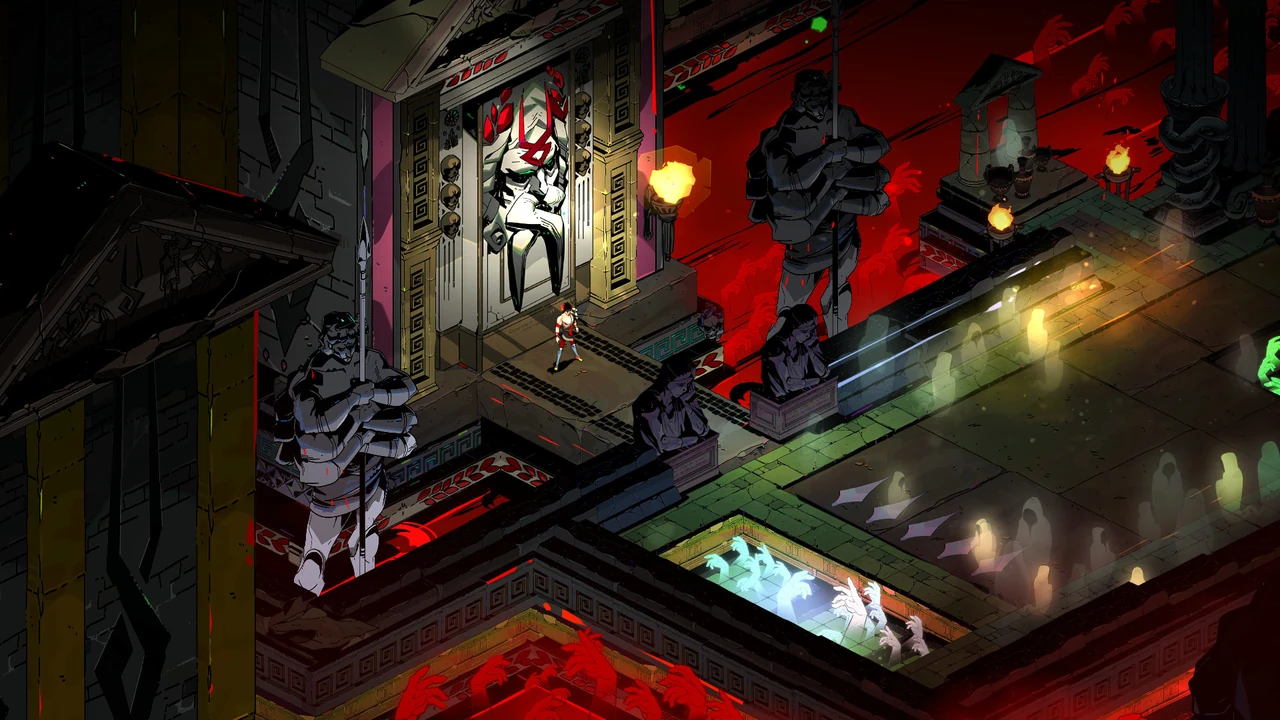
The artwork and voiced cast give Hades a strong mythological identity built around particular people as well as places. That matters because returning to those characters is part of the structure; the presentation needs to make the spaces between fights interesting, not merely decorative. We rate the creative coherence highly. Readers should also consider whether recurring conversations are an attraction in an action game. Some will value the way they create continuity, while others mainly want another immediate combat challenge. The same feature can therefore be a major strength or an interruption depending on the player's priorities. Tartarus, Asphodel and Elysium give successive stages different moods, while returning to the House of Hades brings the focus back to its residents.
Choose it when another attempt sounds inviting
Hades offers clear reasons to return through weapon choices, boon combinations, persistent development and continuing relationships. Those systems support a high replay assessment because they give an attempt more than one possible purpose. A player can pursue an escape, investigate a build or see how a character thread develops. That does not remove the fact that combat and repeated failure remain central. Hades II is the most useful comparison when the same broad structure appeals but a different protagonist and magical emphasis sound more interesting. Choose the original for its own cast and tools, rather than treating it only as preparation for the sequel. Its strongest appeal is the connection between a changing run and a continuing home. In our adaptive runs selection, Hades earns its place because weapon and boon combinations support different approaches.
The verdict
Choose Hades for fast action runs, varied builds and a story that continues between attempts.
Reasons to play
- Weapon and boon combinations support different approaches
- Story progression continues across attempts
- Distinctive character artwork and readable presentation
Reasons to think twice
- Repeated attempts are central, not an optional extra
- Story progress takes more than one successful escape
- Single-player only
See the game
Assist & accessibility
Parents’ guide
Players: Single-player. No in-game purchase marker in the checked Steam listing. Separate downloadable content may be sold.
Age classification: 12. Nintendo Switch edition; not a separate PC classification
A useful starting tip
Choose boons that support the weapon and effects already defining the run, rather than treating each offered power as an isolated upgrade.
A different direction
Compare this with Hades II: A substantial action sequel that builds meaningful variation around witchcraft and repeated attempts.
Official sources
Reviewed: November 2026
You might also like
 Sekiro: Shadows Die Twice - GOTY EditionRead review →
 CelesteRead review →
 Hollow KnightRead review →