FIELD REVIEW / Metroidvania
Hollow Knight
Choose Hollow Knight for interconnected exploration and demanding platform combat, provided you enjoy finding your own route.

Game facts
- Developer
- Team Cherry
- Publisher
- Team Cherry
- Released
- 24 February 2017
- Platforms
- Windows · macOS · Linux (Steam edition)
- Model
- Paid game
- PEGI
- 7 — Nintendo Switch edition; not a separate PC classification
- Players
- Single-player
- Length
- Long
- Difficulty
- 4 / 5 · Demanding
- Steam Deck
- Verified
PEGI source ↗ · Steam Deck status source ↗
Edition: Base game
The score, explained
The interest and responsiveness of the core decisions and actions.
How progression, exploration and goals fit together.
The coherence of the visual, musical and narrative presentation.
How clearly the game explains its rules and offers useful ways to engage.
The depth of optional goals, alternative approaches and reasons to return.
Movement and combat share the same world
Hollow Knight places side-scrolling combat inside Hallownest, a ruined kingdom whose regions connect through routes, shortcuts and initially inaccessible spaces. New movement abilities and spells change both how the knight fights and where exploration can lead. That relationship is the main reason for our high core-play assessment: improvement does not remain isolated inside a battle menu. A newly useful action can also make the map more understandable. The challenge is that the player must be interested in both parts of the design. Someone who enjoys exploring but dislikes repeated combat attempts may find important routes demanding, while a player who only wants the next boss may be less interested in investigating the spaces between encounters.
The map becomes a record of understanding
The game emphasises choosing a route through an expansive connected world. That freedom makes remembering a blocked path or an unfinished question useful, especially when another ability changes what the knight can reach. Charms add further decisions about how to approach the journey, giving discoveries a role in combat as well as collection. We value this structure because the same world can become more legible through experience. It also creates a clear trade-off: freedom of direction can become uncertainty about what to do next. Readers who prefer a strongly signposted sequence should not assume that a large map automatically produces satisfying progress. Hallownest is most appealing when returning with a better idea is part of the reward.
A kingdom with recognisable character
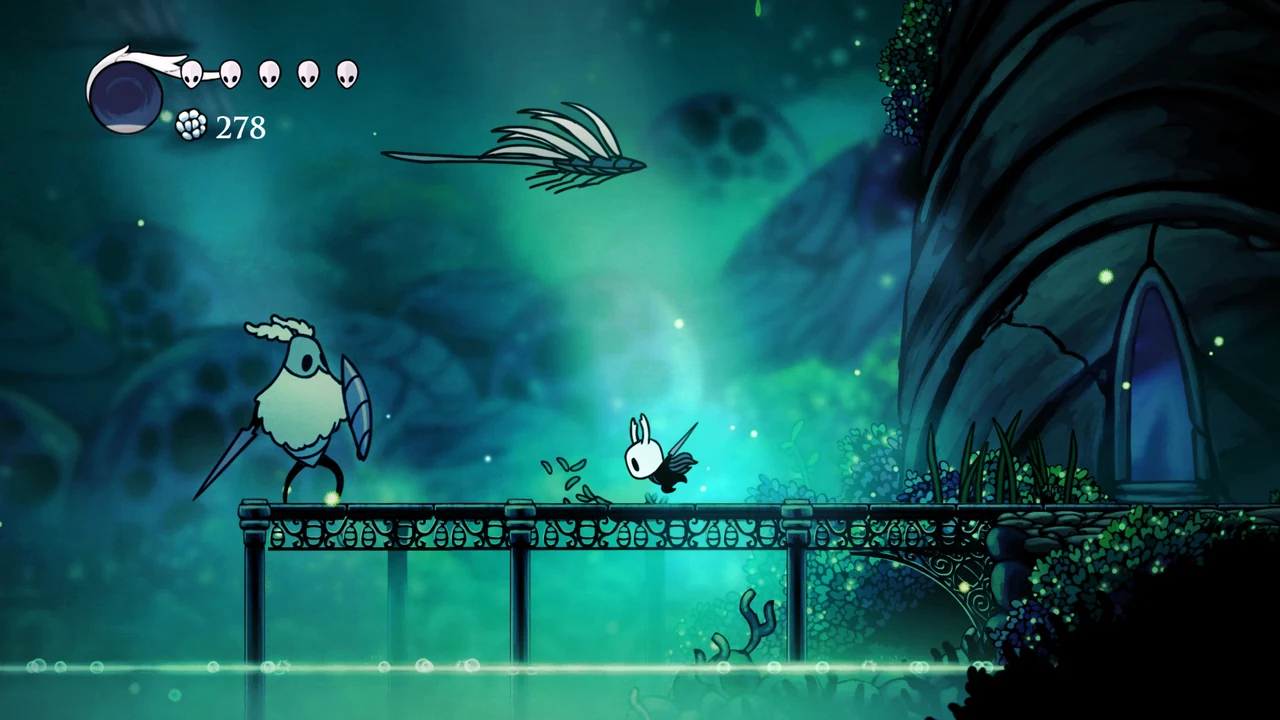
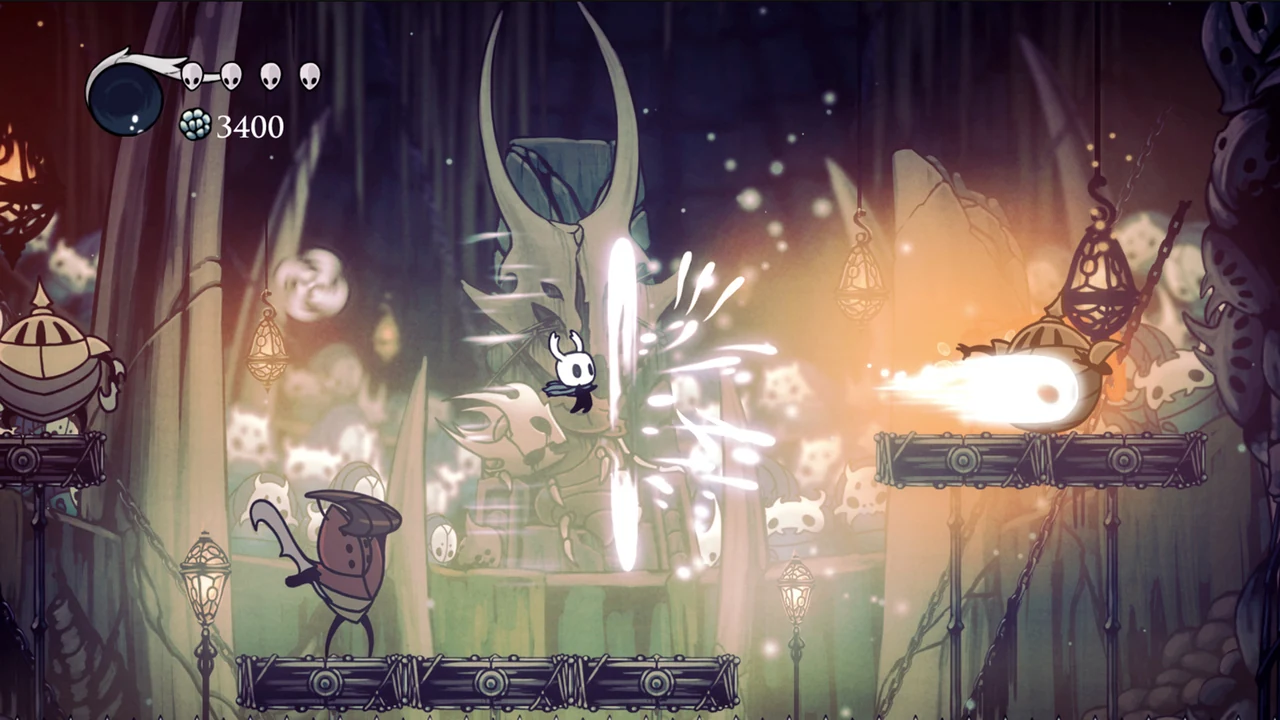
The insect inhabitants, painted landscapes and animated figures give Hollow Knight a consistent visual identity. The artwork presents regions that feel related without looking interchangeable, which matters when landmarks help the player remember an interconnected map. We rate that coherence highly. The presentation also allows the same kingdom to contain humour, unease and imposing opponents without abandoning its central style. A prospective player should consider the challenge separately from the inviting character designs: a small protagonist and expressive creatures do not mean the combat is necessarily gentle, and the game's exploration is designed to coexist with dangerous encounters. Dirtmouth's quiet refuge contrasts with Greenpath's vegetation and the rain-soaked City of Tears.
Choose it for a world worth revisiting
Hollow Knight suits players who enjoy gradually turning an unfamiliar place into a mental map. The official content descriptions include additional quests, bosses and charms, giving the broader adventure further goals beyond following a single direct route. Our return assessment reflects those available discoveries and combat options, rather than a promise that every reader will want to complete them all. Animal Well offers an informative alternative if connected-world curiosity is the attraction but direct fighting is not. Choose Hollow Knight when exploring, developing movement and learning encounters sound like complementary activities. Its strongest recommendation is for a player who wants knowledge of the world and confidence in its action to grow together over the journey. In our dangerous expeditions selection, Hollow Knight earns its place because interconnected areas reward exploration.
The verdict
Choose Hollow Knight for interconnected exploration and demanding platform combat, provided you enjoy finding your own route.
Reasons to play
- Interconnected areas reward exploration
- Movement upgrades change access to the world
- A cohesive illustrated setting supports discovery
Reasons to think twice
- Limited direction can leave new players unsure where to go
- Returning through familiar areas is part of the structure
- Optional challenges require substantial execution skill
See the game
Assist & accessibility
Explore the available settings and control options on the official game page before choosing your setup.
Parents’ guide
Players: Single-player. No in-game purchase marker in the checked Steam listing. Separate downloadable content may be sold.
Age classification: 7. Nintendo Switch edition; not a separate PC classification
A useful starting tip
Mark an unexplored connection before leaving an area; a movement ability can make that remembered route more valuable than another aimless circuit.
A different direction
Compare this with Sekiro: Shadows Die Twice - GOTY Edition: A demanding action game whose posture system makes deflection, pressure and enemy knowledge more important than collecting better equipment. Posture pressure rewards staying engaged with an opponent instead of relying on a larger equipment collection.
Official sources
Reviewed: November 2026
You might also like
 Sekiro: Shadows Die Twice - GOTY EditionRead review →
 HadesRead review →
 CelesteRead review →