FIELD REVIEW / Platformer
Cuphead
Choose Cuphead for distinctive hand-drawn animation and demanding boss encounters that reward repeated practice. Boss patterns are the main curriculum, so choose it when repeated practice is the attraction.
Game facts
- Developer
- Studio MDHR Entertainment Inc.
- Publisher
- Studio MDHR Entertainment Inc.
- Released
- 29 September 2017
- Platforms
- Windows · macOS (Steam edition)
- Model
- Paid game
- PEGI
- 7 · Fear, Violence — Steam UK listing
- Players
- Single-player · Multi-player · Co-op · Shared/Split Screen Co-op
- Length
- Medium
- Difficulty
- 5 / 5 · Demanding
- Steam Deck
- Verified
PEGI source ↗ · Steam Deck status source ↗
Edition: Base game
The score, explained
The interest and responsiveness of the core decisions and actions.
How progression, exploration and goals fit together.
The coherence of the visual, musical and narrative presentation.
How clearly the game explains its rules and offers useful ways to engage.
The depth of optional goals, alternative approaches and reasons to return.
A cartoon built around demanding encounters
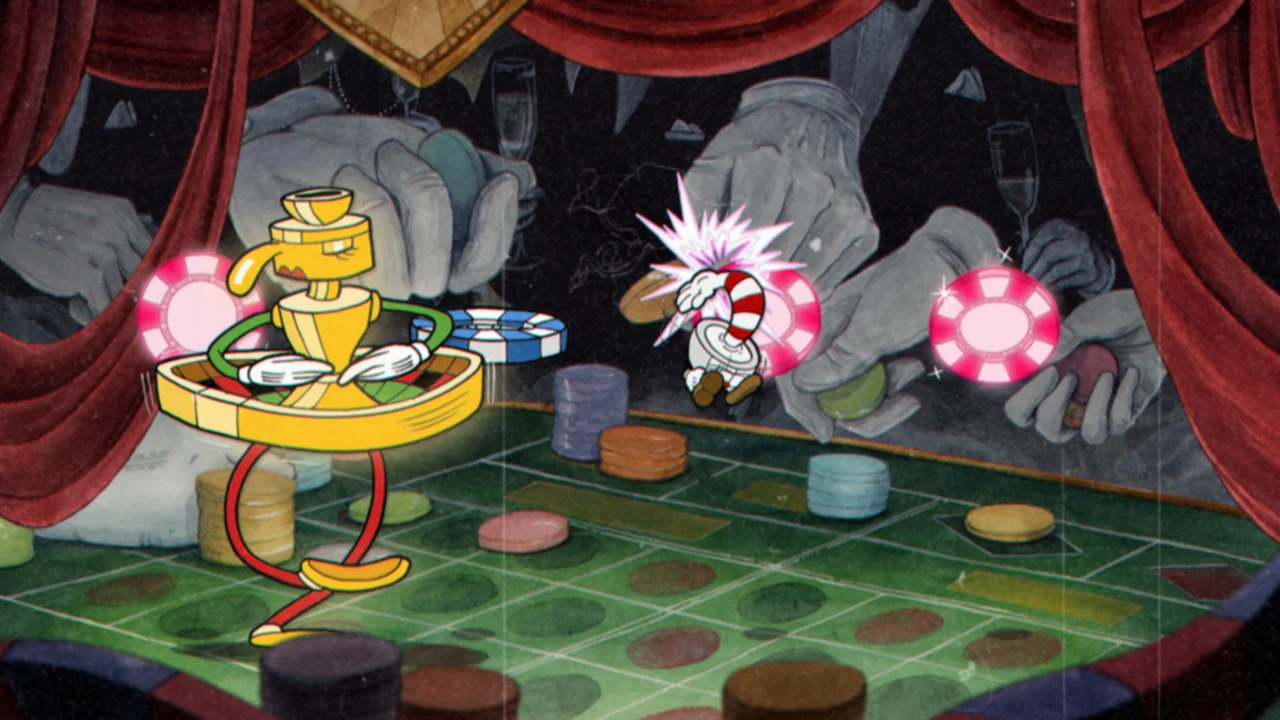
Cuphead places boss battles at the centre of a run-and-gun action game. Weapons and special moves provide options, but the main attraction is learning how an encounter behaves and executing a response. The game makes its animation style immediately prominent, yet the practical recommendation should begin with the action. Our core-play assessment is high because the design has a focused purpose. It is also a selective recommendation: readers who dislike repeating a fight to understand its patterns may find the experience frustrating. The playful character designs do not imply low difficulty. Cuphead is best chosen when the challenge itself sounds rewarding, rather than when attractive animation is expected to make demanding action irrelevant.
Practice gives the journey momentum
The broader adventure moves through strange worlds and opponents, while acquiring weapons and learning new moves gives the player ways to adjust an approach. The game also confirms local co-operative play, making a shared attempt part of the available design. We rate the structure for keeping the encounters central rather than surrounding them with unrelated systems. The trade-off is that progress can depend on becoming more capable at an obstacle already encountered. A player who expects a new scene after every short session may not enjoy that rhythm. Cuphead makes more sense when a familiar fight becoming understandable is a meaningful form of progress, whether it is approached alone or alongside another player.
Animation with a specific historical influence
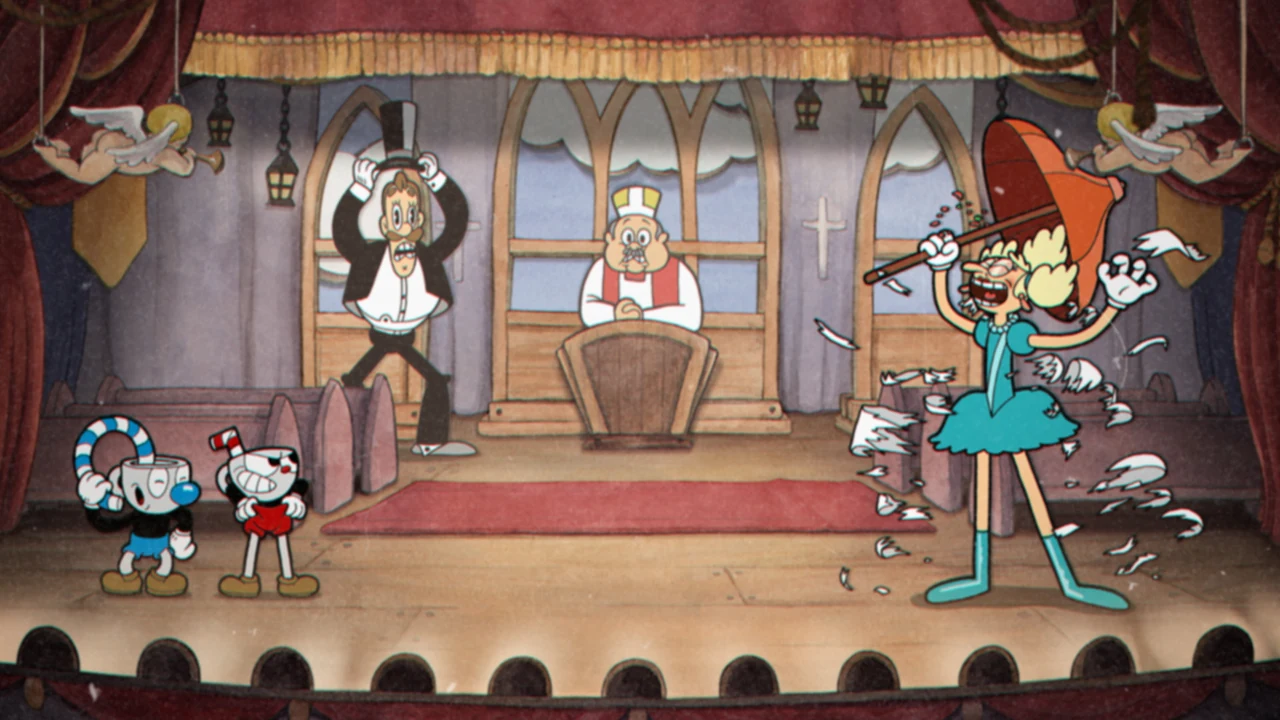
The official creative description draws directly on 1930s cartoons, identifying hand-drawn animation, watercolour backgrounds and original jazz recordings. Those choices give Cuphead more than a generic retro appearance. They establish a consistent visual and musical identity around the changing encounters. We rate the presentation highly because the technique and the exaggerated action support one another. Exaggerated expressions and rubber-hose movement give the bosses personalities, while their changing forms make an encounter feel like a piece of animated theatre that the player must learn to read. A prospective player should also separate enjoyment of the style from comfort with projectile patterns and repeated attempts. The artwork is a major attraction, but it is not a replacement for liking the core activity.
Choose it when mastery sounds worthwhile
Cuphead's return value comes largely from revisiting encounters with a better understanding of their demands and from the available option of local co-operation. It is a different kind of replay from an endlessly generated map, and our assessment reflects that. The central question is whether learning a difficult fight is something you want to spend time on. Neva offers an alternative within this catalogue for readers drawn to expressive animation but looking for a more story-led action adventure. Choose Cuphead when the combination of demanding patterns and a distinctive cartoon identity is the point. It is strongest as a deliberate challenge, rather than as a gentle tour through an attractive visual style. Boss patterns are the main curriculum, so choose it when repeated practice is the attraction.
The verdict
Choose Cuphead for distinctive hand-drawn animation and demanding boss encounters that reward repeated practice. Boss patterns are the main curriculum, so choose it when repeated practice is the attraction.
Reasons to play
- Distinctive animation and visual identity
- Boss encounters are the central attraction
- Local co-op is listed for the Steam edition
Reasons to think twice
- Difficulty is a major consideration before buying
- Progress can involve many repeated attempts
- Additional content is sold separately
See the game
Assist & accessibility
Explore the available settings and control options on the official game page before choosing your setup.
Parents’ guide
Players: Single-player · Multi-player · Co-op · Shared/Split Screen Co-op. No in-game purchase marker in the checked Steam listing. Separate downloadable content may be sold.
Age classification: 7. Fear · Violence Steam UK listing
A useful starting tip
Watch a boss's attack sequence long enough to recognise a safe opening before trying to maximise damage throughout the whole fight.
A different direction
Compare this with Celeste: Choose Celeste for precise climbing and dash challenges, a focused story and extensive optional platforming tests. Choose this when precise movement, rather than combat, is the skill you want to develop.
Official sources
Reviewed: November 2026
You might also like
 Sekiro: Shadows Die Twice - GOTY EditionRead review →
 HadesRead review →
 CelesteRead review →