FIELD REVIEW / Roguelike
Dead Cells
Choose Dead Cells for fast platform combat, weapon experimentation and branching runs with permanent unlocks.

Game facts
- Developer
- Motion Twin
- Publisher
- Motion Twin
- Released
- 6 August 2018
- Platforms
- Windows · macOS · Linux (Steam edition)
- Model
- Paid game
- PEGI
- 16 · Violence — Steam UK listing
- Players
- Single-player
- Length
- Medium
- Difficulty
- 4 / 5 · Demanding
- Steam Deck
- Verified
PEGI source ↗ · Steam Deck status source ↗
Edition: Base game
The score, explained
The interest and responsiveness of the core decisions and actions.
How progression, exploration and goals fit together.
The coherence of the visual, musical and narrative presentation.
How clearly the game explains its rules and offers useful ways to engage.
The depth of optional goals, alternative approaches and reasons to return.
Movement and fighting inside a changing run
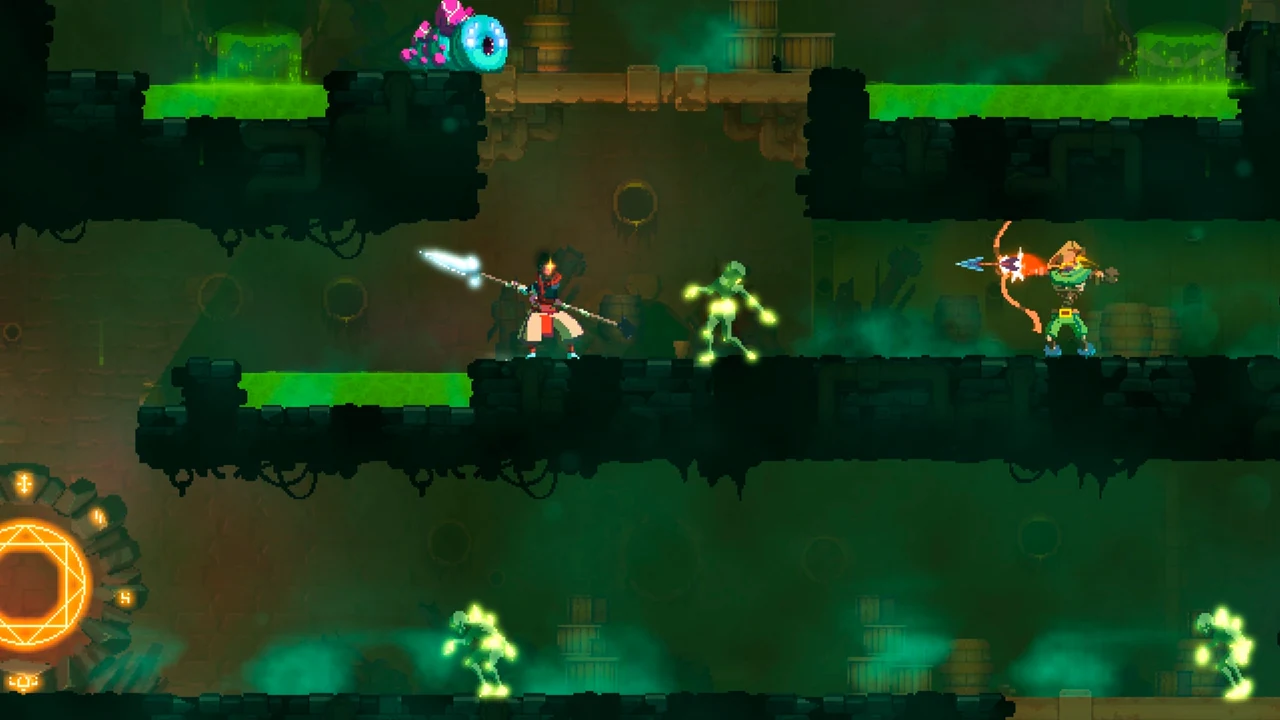
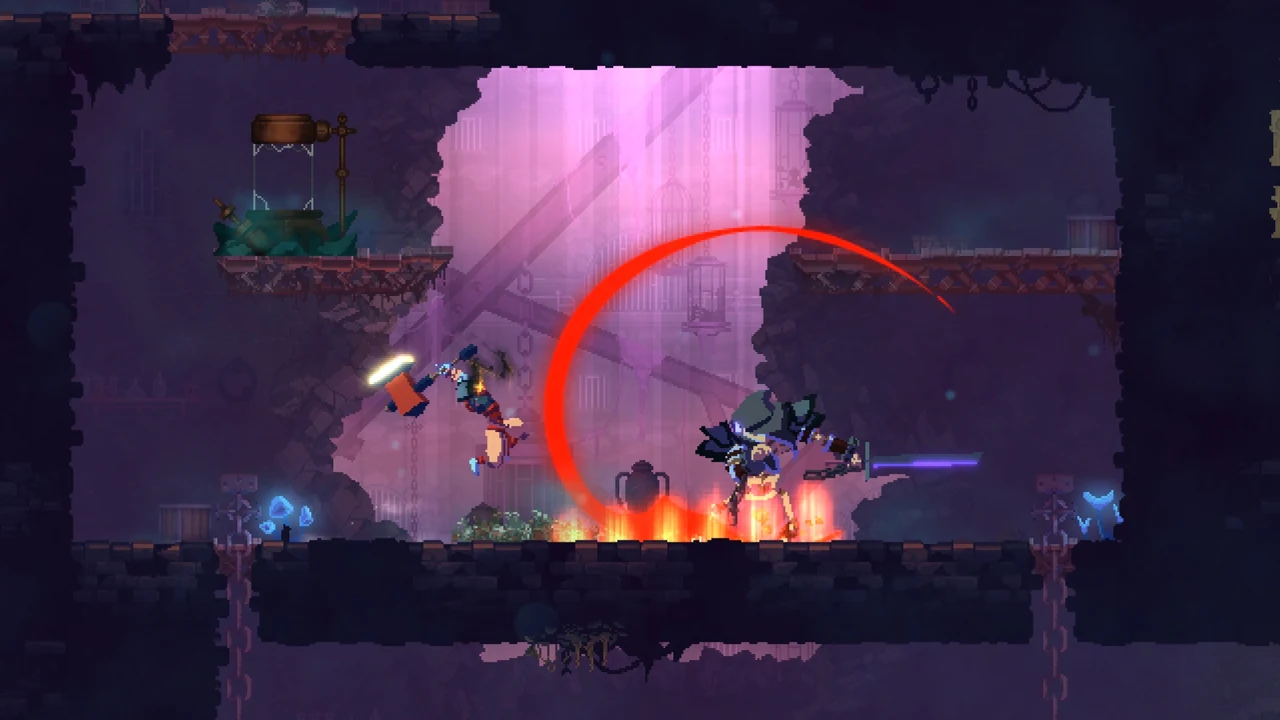
Dead Cells places side-scrolling combat inside a castle whose routes and opportunities change between attempts. Weapons, abilities and a defensive roll provide different ways to handle danger, while the run structure makes survival a continuing concern. The premise is explicit that defeat sends the player back to begin again. The strongest element is the relationship between moment-to-moment action and choosing an approach that suits the current equipment. The recommendation is less suitable for someone who wants every local success permanently preserved. A player needs to enjoy practising movement and combat even when an attempt ends early, rather than relying solely on reaching another piece of the story as the reward.
Permanent options, temporary momentum
Some developments carry forward, including unlocked routes and access to further abilities or equipment, while the immediate momentum of a run remains vulnerable. That distinction gives Dead Cells two forms of progress: improving the options available and becoming more capable of using them. We rate the structure highly because branching paths can make repeated attempts involve decisions as well as execution. The trade-off is that unlocking something does not remove the need to survive. Players who find restart-heavy structures discouraging should treat that as a genuine preference, not a problem that a favourable score can solve. The game is strongest when returning to a familiar starting point feels like another chance to apply an evolving plan.
A lively castle with dangerous occupants
The official presentation gives the changing castle a vivid style while keeping its enemies and weapons central to the action. We rate the visual identity positively because the setting supports the mixture of exploration and repeated combat rather than pretending to be a calm place to wander. The pace of movement and the need to respond to threats are more important suitability questions than whether the artwork looks inviting. Those matters should be investigated separately for the intended setup. The editorial judgement concerns how the available tools, routes and visual identity form a coherent action-game proposition. The Prisoners' Quarters introduce the pattern of searching for equipment, reading enemy attacks and choosing a route onwards.
For players who like refining a route
Dead Cells supports repeat play through equipment variation, branching paths and unlockable options, giving the next attempt a clear reason to differ. Our high return score reflects those available systems while recognising that a familiar opening can still become repetitive for the wrong player. Blasphemous is a useful alternative for readers who want dangerous side-scrolling exploration in a more persistent connected world. Choose Dead Cells when the possibility of assembling another effective approach is the attraction. It asks for a willingness to lose temporary progress, but offers the opportunity to turn route knowledge, equipment decisions and improved execution into a stronger attempt. That exchange is central to deciding whether it fits. In our adaptive runs selection, Dead Cells earns its place because different weapons encourage varied combat styles.
The verdict
Choose Dead Cells for fast platform combat, weapon experimentation and branching runs with permanent unlocks.
Reasons to play
- Different weapons encourage varied combat styles
- Branching routes give repeated runs more variety
- Permanent unlocks sit alongside run-based progression
Reasons to think twice
- A failed attempt loses much of that run’s progress
- Fast reactions are important
- Additional expansions are sold separately
See the game
Assist & accessibility
Explore the available settings and control options on the official game page before choosing your setup.
Parents’ guide
Players: Single-player. No in-game purchase marker in the checked Steam listing. Separate downloadable content may be sold.
Age classification: 16. Violence Steam UK listing
A useful starting tip
Choose equipment that supports a recognisable combat approach, then use route knowledge to avoid fighting in positions that undermine it.
A different direction
Compare this with Blasphemous: A severe gothic adventure with an unusually coherent visual identity and demanding encounters. Measured positioning and a connected map give its combat a different rhythm from a pure boss rush.
Official sources
Reviewed: November 2026
You might also like
 Sekiro: Shadows Die Twice - GOTY EditionRead review →
 HadesRead review →
 CelesteRead review →