FIELD REVIEW / Boss-rush action
Furi
A concentrated sequence of duels for players who want to understand a fight and execute it better. Its duel-led structure is the most direct option here for concentrating on an individual opponent.

Game facts
- Developer
- The Game Bakers
- Publisher
- The Game Bakers
- Released
- 5 July 2016
- Platforms
- Windows (Steam edition)
- Model
- Paid game
- PEGI
- 16 · Violence, Bad Language — Steam UK listing
- Players
- Single-player
- Length
- Short
- Difficulty
- 5 / 5 · Demanding
- Steam Deck
- Verified
PEGI source ↗ · Steam Deck status source ↗
Edition: Base game
The score, explained
The interest and responsiveness of the core decisions and actions.
How progression, exploration and goals fit together.
The coherence of the visual, musical and narrative presentation.
How clearly the game explains its rules and offers useful ways to engage.
The depth of optional goals, alternative approaches and reasons to return.
The duel is the main event
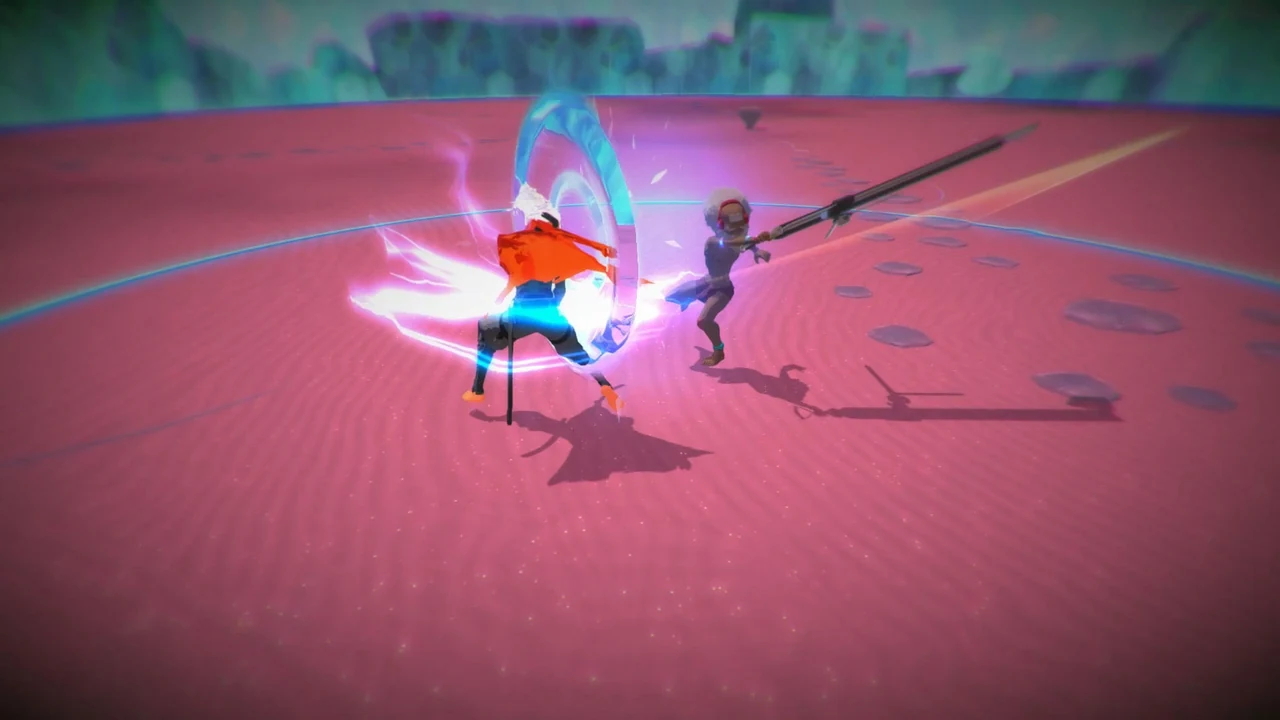
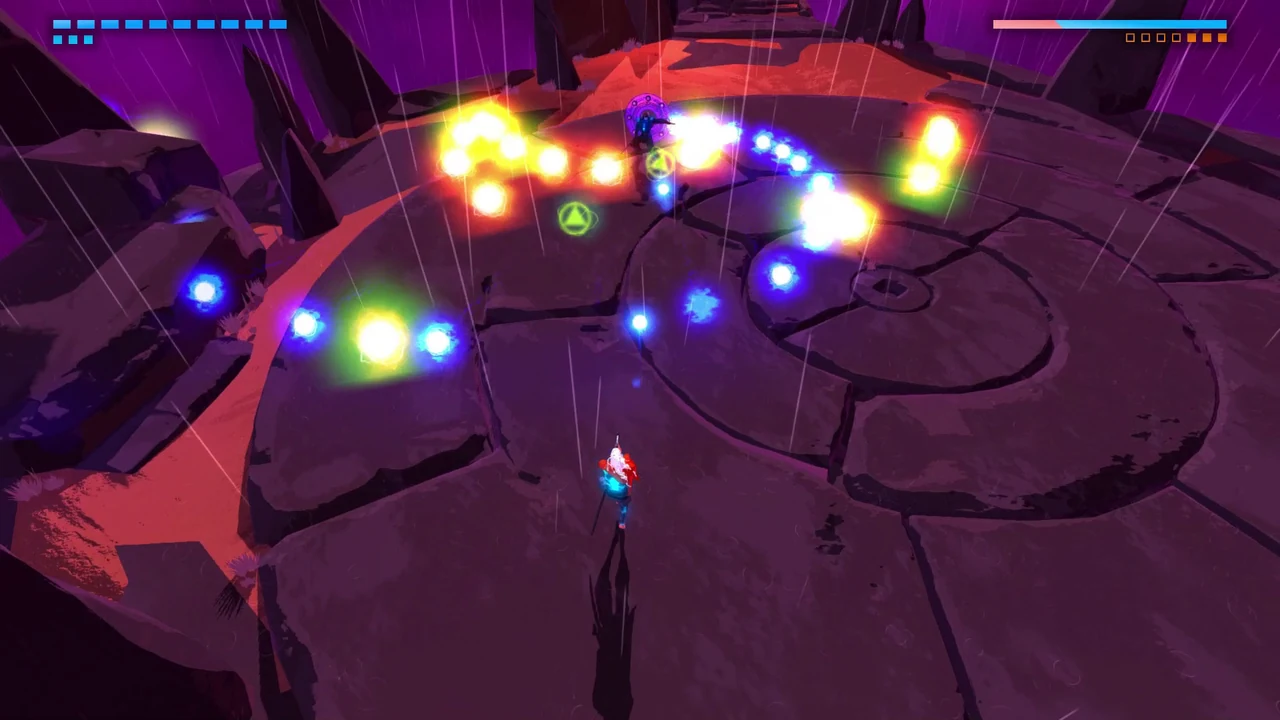
Furi concentrates its action around escaping imprisonment through demanding confrontations. Sword fighting and dual-stick shooting create different kinds of danger within the same combat identity, asking the player to read patterns and choose a response. Our high core-play score reflects that clear focus. There is little ambiguity about why to investigate the game: the fight itself should be the attraction, not merely an obstacle between story scenes. The corresponding limitation is just as important. Readers who want extensive exploration, party management or a broad crafting system should not expect those interests to be the centre here. Furi makes a stronger case for someone who enjoys understanding an opponent and returning with a more deliberate plan.
Concentration instead of a crowded world
The escape premise gives a sequence of confrontations a simple direction, allowing the structure to keep attention on combat. That restraint can be valuable when the goal is to recognise a pattern, practise a response and execute it more consistently. The structure works through maintaining that emphasis rather than surrounding the duels with unrelated progression systems. It is nevertheless a particular kind of satisfaction. Repeating an encounter can feel like learning or like an interruption, depending on what the player wanted from the game. The recommendation assumes the former. Someone who needs a steady supply of new locations and side activities to stay motivated may find the concentrated format less appealing than a broader action adventure.
A strong identity around each confrontation
Furi gives each duel a strong identity through bold colour, distinctive character design and an electronic soundtrack. The encounters alternate the scale of their demands: a wide arena can ask you to read projectile patterns, while a closer exchange places more weight on timing and the immediate opponent. That changing rhythm makes the visual differences between guardians useful as well as memorable. The stripped-back structure also allows the music and character presentation to occupy more attention than they might in a sprawling adventure. Choose it when a concentrated series of fights sounds appealing. The game has little interest in padding the space between those confrontations with equipment management or lengthy side activities.
For the pleasure of a cleaner attempt
Furi's reasons to return are closely tied to improving how a fight is handled. A familiar pattern can become a chance to act deliberately rather than simply survive, which gives repeat encounters a purpose beyond seeing more content. That supports a high return score for the intended audience, while offering little reassurance to someone who dislikes practice-led action. Sifu is the most useful contrast in this catalogue: it also rewards learning but asks the player to manage groups and environmental opportunities rather than mainly concentrate on duels. Choose Furi when the prospect of a focused confrontation sounds more rewarding than a large map. The recommendation rests on enjoying the process of becoming better at the same demanding activity. Its duel-led structure is the most direct option here for concentrating on an individual opponent.
The verdict
A concentrated sequence of duels for players who want to understand a fight and execute it better. Its duel-led structure is the most direct option here for concentrating on an individual opponent.
Reasons to play
- A focused duel structure keeps attention on combat decisions
- Sword fighting and shooting create contrasting demands
- A strong visual and musical identity supports the encounters
Reasons to think twice
- Repeated attempts are fundamental to learning
- Limited interest for players seeking broad exploration or party development
See the game
Assist & accessibility
Explore the available settings and control options on the official game page before choosing your setup.
Parents’ guide
Players: Single-player. No in-game purchase marker in the checked Steam listing. Separate downloadable content may be sold.
Age classification: 16. Violence · Bad Language Steam UK listing
A useful starting tip
Use an attempt to learn one troublesome pattern instead of judging every run only by whether the entire fight is won.
A different direction
Compare this with Sifu: A demanding combat study where better technique changes how far a life can take you. The ageing system gives cleaner execution a consequence beyond the result of the current fight.
Official sources
Reviewed: November 2026
You might also like
 Sekiro: Shadows Die Twice - GOTY EditionRead review →
 HadesRead review →
 CelesteRead review →